0

When Should Kids Start Brushing Their Teeth?

When should I schedule my child’s first trip to the dentist? Should my 3-year-old be flossing? How do I know if my child needs braces?

Many parents have a tough time judging how much dental care their kids need. They know they want to prevent cavities, but they don’t always know the best way to do so. Here are some tips and guidelines.
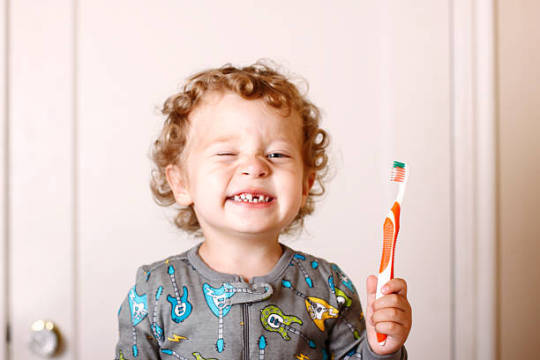
When Should Kids Start Brushing Their Teeth?

Good dental care begins before a baby’s first tooth appears. Just because you can’t see the teeth doesn’t mean they aren’t there. Teeth actually begin to form in the second trimester of pregnancy. At birth, your baby has 20 primary teeth, some of which are fully developed in the jaw.

Here’s when and how to care for those little choppers:

  • Even before your baby starts teething, run a clean, damp washcloth over the gums to clear away harmful bacteria.
  • Once your baby gets teeth, brush them with an infant toothbrush. Use water and a tiny bit of fluoride toothpaste (about the size of a grain of rice). Use fluoride toothpaste that carries the American Dental Association’s (ADA) seal of acceptance. (If you are using baby toothpaste without the fluoride, keep it to the same amount because you still want to minimize any toothpaste that is swallowed.)
  • Once your baby’s teeth touch, you can begin flossing in between them.
  • Around age 2, your child should learn to spit while brushing. Avoid giving your child water to swish and spit because this might make swallowing toothpaste more likely.
  • Kids ages 3 and up should use only a pea-sized amount of fluoride toothpaste.
  • Always supervise kids younger than 6 while brushing, as they are more likely to swallow toothpaste.

Even babies can develop tooth decay if good feeding habits aren’t practiced. Putting a baby to sleep with a bottle might be convenient, but can harm the baby’s teeth. When the sugars from juice or milk remain on a baby’s teeth for hours, they can eat away at the enamel, creating a condition known as bottle mouth. Pocked, pitted, or discolored front teeth are signs of bottle mouth. Kids with severe cases might develop cavities and need all of their front teeth pulled (permanent teeth will grow in later).

Parents and childcare providers should help young kids set specific times for drinking each day because sucking on a bottle throughout the day can be equally damaging to young teeth. Babies as young as 6 months are encouraged to switch from a bottle to a sippy cup(with a straw or hard spout). By 12 months of age, they’ll have the motor skills and coordination to use the cup on their own.

http://kidshealth.org/en/parents/healthy.html?WT.ac=ctg

0

Basics of Braces:

Some kids can’t wait to get their braces, seeing them as a sign that their teen years can’t be far behind. Others, though, worry about what they’ll feel or look like.

However your child feels, you probably have some questions and concerns of your own about braces (including how you’re going to pay for them!). Here’s the lowdown on kids and braces.

Why Kids Need Braces

Kids can need braces for any number of reasons, including crooked, overlapping, or overcrowded teeth, or a “bad bite” (known as malocclusion). Malocclusion is when there’s a difference in the sizes of the top and bottom jaws. When the upper jaw is bigger than the lower jaw, it’s called an overbite. When the lower jaw is bigger, it’s called an underbite.

Sometimes tooth and jaw problems can be caused by losing baby teeth too soon, accidents, or habits like thumb sucking. But often they’re inherited, so if you or someone in your family needed braces, it’s likely that your kids will, too.

Often, your child’s dentist will be the first to notice problems during a regular visit and recommend that you see an orthodontist (a dentist who specializes in correcting jaw and/or teeth alignment problems). The orthodontist can decide whether your child does indeed need braces and which devices would be best.

There’s no set age for a child’s first orthodontist visit — some kids go when they’re 6, some kids go when they’re 10, and some go while they’re teens. Even adults can need orthodontic treatment. Many orthodontists say kids should see an orthodontist once their permanent teeth start coming in, around age 7. At this age, issues such as uneven bite and overcrowding will become apparent.

Starting the process early doesn’t mean a child will get braces right away. It just means the orthodontist will be able to find problems and decide the best time to start treatment.

http://kidshealth.org/en/parents/braces.html?WT.ac=ctg

0

What Is Teething?

Teething is when teeth first come through a baby’s gums. It can be a frustrating time for babies and their parents. Knowing what to expect during teething and how to make it a little less painful can help.

When Does Teething Start?

While teething can begin as early as 3 months, most likely you’ll see the first tooth start pushing through your baby’s gum line when your little one is between 4 and 7 months old.

The first teeth to appear usually are the two bottom front teeth, also known as the central incisors. They’re usually followed 4 to 8 weeks later by the four front upper teeth (central and lateral incisors). About a month later, the lower lateral incisors (the two teeth flanking the bottom front teeth) will appear.

Next to break through are the first molars (the back teeth used for grinding food), then finally the eyeteeth (the pointy teeth in the upper jaw). Most kids have all 20 of their primary teeth by their third birthday. (If your child’s teeth come in much slower than this, speak to your doctor.)

In some rare cases, kids are born with one or two teeth or have a tooth emerge within the first few weeks of life. Unless the teeth interfere with feeding or are loose enough to pose a choking risk, this is usually not a cause for concern.

What Are the Signs of Teething?

As kids begin teething, they might drool more and want to chew on things. For some babies, teething is painless. Others may have brief periods of irritability, while some may seem cranky for weeks, with crying spells and disrupted sleeping and eating patterns. Teething can be uncomfortable, but if your baby seems very fussy, talk to your doctor.

Although tender and swollen gums could cause your baby’s temperature to be a little higher than normal, teething doesn’t usually cause high fever or diarrhea. If your baby does develop a fever during the teething phase, something else is probably causing the fever and you should contact your doctor.

How Can I Make Teething Easier?

Here are some tips to keep in mind when your baby is teething:

  • Gently wipe your baby’s face often with a cloth to remove the drool and prevent rashes from developing.
  • Rub your baby’s gums with a clean finger.
  • Give your baby something to chew on. Make sure it’s big enough that it can’t be swallowed or choked on and that it can’t break into small pieces. A wet washcloth placed in the freezer for 30 minutes makes a handy teething aid. Be sure to take it out of the freezer before it becomes rock hard — you don’t want to bruise those already swollen gums — and be sure to wash it after each use.

    Rubber teething rings are also good, but avoid ones with liquid inside because they may break or leak. If you use a teething ring, chill it in the refrigerator, but NOT the freezer. Also, never boil to sterilize it — extreme changes in temperature could cause the plastic to get damaged and leak chemicals.

  • Teething biscuits and frozen or cold food are only OK for kids who already eat solid foods. Don’t use them if your child has not yet started solids. And make sure to watch your baby to make sure that no pieces break off or pose a choking hazard.
  • If your baby seems irritable, ask your doctor if it is OK to give a dose of acetaminophen or ibuprofen (for babies older than 6 months) to ease discomfort.
  • Never place an aspirin against the tooth, and don’t rub alcohol on your baby’s gums.
  • Never tie a teething ring around a baby’s neck or any other body part — it could get caught on something and strangle the baby.
  • Don’t use teething necklaces made of amber. These can lead to strangulation or choking if pieces break off.
  • Don’t use teething gels and tablets because they may not be safe for babies.

http://kidshealth.org/en/parents/teething.html?WT.ac=ctg

0

Children with Special Needs Are at Increased Risk for Oral Disease

At the beginning of 2010, as many as 17 percent of children in the United States were reported as having special health care needs. Behavioral issues, developmental disorders, cognitive disorders, genetic disorders and systemic diseases may increase a child’s risk of developing oral disease, according to an article published in the May/June 2010 issue of General Dentistry, the peer-reviewed clinical journal of the Academy of General Dentistry (AGD). For a child with special health care needs, special diets, frequent use of medicine and lack of proper oral hygiene can make it challenging to maintain good oral health.

“By the time these children are 12 months old, they should have a ‘dental home’ that will allow a dentist to administer preventive care and educate parents about good oral health habits tailored to fit their child’s needs,” says Maria Regina P. Estrella, DMD, MS, lead author of the article.

photo-003-1024x754

For example, some parents may not know that special diets for children with below-average weight or unique food allergies can unintentionally promote tooth decay. Underweight children may be directed to consume drinks containing high amounts of carbohydrates, which can cause demineralization of teeth. Medications can also be a source of concern. Because children often find it difficult to swallow pills, many of their medicines may utilize flavored, sugary syrups. When parents or guardians give these syrups to a child, especially at bedtime, the sugars can pool around the child’s teeth and gums, promoting decay.

Click here for more:

http://www.knowyourteeth.com/infobites/abc/article/?abc=C&iid=296&aid=7810

0

Cavity Prevention Tips for Preschoolers

Providing proper care and oral hygiene during preschool years can mean a lifetime of good oral health, according to an article in the January/February 2005 issue of General Dentistry, the clinical, peer-reviewed journal of the Academy of General Dentistry (AGD).

Research shows that children who develop cavities in their baby teeth are more likely to develop cavities as an adult. So how can a parent determine if their child is at risk for cavities? It all begins with that first trip to the dentist.

The first dental visit should include an exam to determine if the child is at low, moderate or high risk for cavities and will help decide which oral hygiene program best suits them. Your dentist will be able to explain to you how often your child should be brushing, as well as provide flossing instructions for the child.

“Brushing should begin when the first tooth erupts,” says lead author of the report, Jane Soxman, DDS. “Parents should be in charge of a child’s brushing until the child is able to tie his or her shoes or write their own name clearly – usually 5 or 6 years of age.”

Children whose parents are prone to cavities and tooth decay need to be extra careful.

braces 8

“We know there’s a genetic predisposition to tooth decay,” says Dr. Soxman.

Children at high risk for cavities should be discouraged from eating starchy snacks such as crackers and chips. In fact, one good way to determine if a snack is good for a child is to check their teeth 20 minutes after consumption. If the teeth are still filled with food, the snack should be discontinued.

“Regardless of what food is eaten, regular efforts have to be made to clean the teeth before decay can begin,” says AGD past president Tom Howley, DDS, MAGD. “This means things like brushing, flossing, rinsing after snacks and using non-sugary beverages in bottles or sippy cups.”

“It is always good to schedule routine dental checkups and to limit your child’s intake of sugary foods,” says Dr. Soxman.

“Essentially all children are at risk for cavities to some extent or another,” says Dr. Howley. “So the same basic principles apply – control of exposure of cavity-inducing food and thorough cleaning of the teeth. Even if decay is a low risk for an individual child, they can still develop gingivitis or other problems if home care is inadequate.”

http://www.knowyourteeth.com/infobites/abc/article/?abc=C&iid=296&aid=1169

0

Early Dental Visits May Help Prevent Problems Down the Road

Many parents may not know their 1-year-olds are ready for their first dental checkup, but more and more dentists agree that the earlier children visit the dentist, the better.

 Black and white baby toddlers brushing teeth

The Academy of General Dentistry (AGD) and the American Dental Association (ADA) are just two of the organizations that recommend bringing children to the dentist six months after they get their first tooth, usually sometime between 1 year and 18 months of age.

“When teeth start to come in, we need to teach parents about nutrition and the growth and development of the child and their teeth,” says AGD spokesperson Cynthia Sherwood, DDS.

While age-1 visits are recommended for all children, they could prove especially beneficial for children who drink liquids other than water. Acids and sugars in juices, formulas and breast milk can all lead to decay. Visiting the dentist at age 1 helps spot early signs of decay and cavities in baby teeth. It could also help put a major dent in childhood oral disease, which affects an estimated 2.5 million children nationwide and often results in lifelong problems that are painful, expensive and not just limited to the mouth.

“There’s a common misconception that they’re just baby teeth, and they aren’t important,” says Dr. Sherwood. “But really, it’s about establishing good oral care habits.”

The age-1 visit won’t just involve the child – parents also participate, typically holding the child while the dentist takes a look inside the child’s mouth. The dentist will then spend time discussing proper eating and tooth-care habits with parents to help head the child in the right direction, so future dental visits aren’t so scary.

http://www.knowyourteeth.com/infobites/abc/article/?abc=C&iid=296&aid=1172

0

Pacifiers Have Negative and Positive Effects

It’s one of the hardest habits to break and can require a great deal of persuasion: Parents often struggle with weaning their child off of a pacifier.

There is much debate regarding the use of pacifiers, but there is evidence to show that there are both pros and cons, according to a study in the January/February 2007 issue of General Dentistry, the Academy of General Dentistry’s (AGD) clinical, peer-reviewed journal.

“Contrary to popular belief, there are some positive effects that result from sucking on pacifiers,” says Jane Soxman, DDS, author of the study and Diplomate of the American Board of Pediatric Dentistry. “One is that they assist in reducing the incidence of sudden infant death syndrome (SIDS). Babies who are offered a pacifier do not sleep as deeply as those who sleep without a pacifier. Pacifier sucking makes it possible for the infant to be aroused from a deep sleep that could result in the stopping of breathing. Pacifiers also increase sucking satisfaction and provide a source of comfort to infants.”

However, parents should be aware of the negative effects of pacifier sucking on an infant’s oral health. “Children should stop using pacifiers by age 2,” says AGD spokesperson Luke Matranga, DDS, MAGD, ABGD. “Up until the age of 2, any alignment problem with the teeth or the developing bone is usually corrected within a 6-month period after pacifier use is stopped. Prolonged pacifier use and thumb sucking can cause problems with the proper growth of the mouth, alignment of the teeth and changes in the shape of the roof of the mouth.”

There is also an association between pacifier use and acute middle ear infections (otitis media).

“Continuous sucking on a pacifier can cause the auditory tubes to become abnormally open, which allows secretions from the throat to seep into the middle ear,” explains AGD spokesperson Maria Smith, DDS. “Transmission of bacteria in secretions would lead to middle ear infections.”

The bottom line is that if your child is continuously battling middle ear infections, you may have an alternative to surgery or antibiotics to stop this problem, says Dr. Smith, which would be to remove the pacifier.

Breaking the pacifier habit is not always easy, and there are several methods parents can use to stop it. Parents can dip the pacifier in white vinegar, making it distasteful; pierce the nipple of the pacifier with an ice pick or cut it shorter to reduce sucking satisfaction; leave it behind on a trip; or implement the “cold turkey” method.

Tips and recommendations:

  • Pacifier use should be restricted to the time when the infant is falling asleep.
  • Pacifiers can cause severe lacerations if the shield is held inside the lips.
  • Look for a pacifier with ventilation holes in the shield, as they permit air passage. This is important if the pacifier accidentally becomes lodged in your child’s throat.
  • In order to prevent strangulation, do not place a cord around your child’s neck to hold a pacifier. Look for pacifiers that have a ring.
  • A symmetrical nipple permits the pacifier to remain in the correct sucking position.

Dispose of the pacifier after use; it is not sanitary to keep it or give it away.

0

What is Baby Bottle Tooth Decay?

Baby bottle tooth decay is caused by the frequent and long-term exposure of a child’s teeth to liquids containing sugars. Among these liquids are milk, formula, fruit juice, sodas and other sweetened drinks. The sugars in these liquids pool around the infant’s teeth and gums, feeding the bacteria in plaque. Every time a child consumes a sugary liquid, acid produced by these bacteria attack the teeth and gums. After numerous attacks, tooth decay can begin.

The condition also is associated with breast-fed infants who have prolonged feeding habits or with children whose pacifiers are frequently dipped in honey, sugar or syrup. The sweet fluids left in the mouth while the infant is sleeping increase the chances of cavities.

Why should I be worried about baby bottle tooth decay?

Giving an infant a sugary drink at nap or nighttime is harmful because during sleep, the flow of saliva decreases, allowing the sugary liquids to linger on the child’s teeth for an extended period of time. If left untreated, decay can result, which can cause pain and infection. Severely decayed teeth may need to be extracted. If teeth are infected or lost too early due to baby bottle tooth decay, your child may develop poor eating habits, speech problems, crooked teeth and damaged adult teeth. Healthy baby teeth will usually result in healthy permanent teeth.

How can I prevent baby bottle tooth decay?

Never allow a child to fall asleep with a bottle containing milk, formula, juice or other sweetened liquids. Clean and massage the baby’s gums to help establish healthy teeth and to aid in teething. Wrap a moistened gauze square or washcloth around the finger and gently massage the gums and gingival tissues. This should be done after every feeding.

Plaque removal activities should begin upon eruption of the first baby tooth. When brushing a child’s teeth, use a soft toothbrush and water. If you are considering using toothpaste before your child’s second birthday, ask your dentist first. Parents should first bring their child to the dentist when the child is between 6 and 12 months old.

Will changes in my child’s diet help prevent baby bottle tooth decay?

A series of small changes over a period of time is usually easier and eventually leads to better oral health.

To incorporate these changes:

  • Gradually dilute the bottle contents with water over a period of two to three weeks.
  • Once that period is over, if you give a child a bottle, fill it with water or give the child a clean pacifier recommended by a dentist. The only safe liquid to put in a bottle to prevent baby bottle tooth decay is water.
  • Decrease consumption of sugar, especially between meals.
  • Children should be weaned from the bottle as soon as they can drink from a cup, usually by their first birthday, but the bottle should not be taken away too soon, since the sucking motion aids in the development of facial muscles, as well as the tongue.

http://www.knowyourteeth.com/infobites/abc/article/?abc=C&iid=296&aid=1185